
World CupBrazil -- Japan17:00World CupGermany -- Paraguay20:30World CupNetherlands -- Morocco01:00World CupIvory Coast -- Norway17:00World CupFrance -- Sweden21:00World CupMexico -- Ecuador01:00World CupEngland -- Congo DR16:00World CupBelgium -- Senegal20:00World CupUSA -- Bosnia & Herzegovina00:00World CupSpain -- Austria19:00World CupPortugal -- Croatia23:00World CupSwitzerland -- Algeria03:00World CupAustralia -- Egypt18:00World CupArgentina -- Cape Verde Islands22:00World CupBrazil -- Japan17:00World CupGermany -- Paraguay20:30World CupNetherlands -- Morocco01:00World CupIvory Coast -- Norway17:00World CupFrance -- Sweden21:00World CupMexico -- Ecuador01:00World CupEngland -- Congo DR16:00World CupBelgium -- Senegal20:00World CupUSA -- Bosnia & Herzegovina00:00World CupSpain -- Austria19:00World CupPortugal -- Croatia23:00World CupSwitzerland -- Algeria03:00World CupAustralia -- Egypt18:00World CupArgentina -- Cape Verde Islands22:00
Back to news
Football

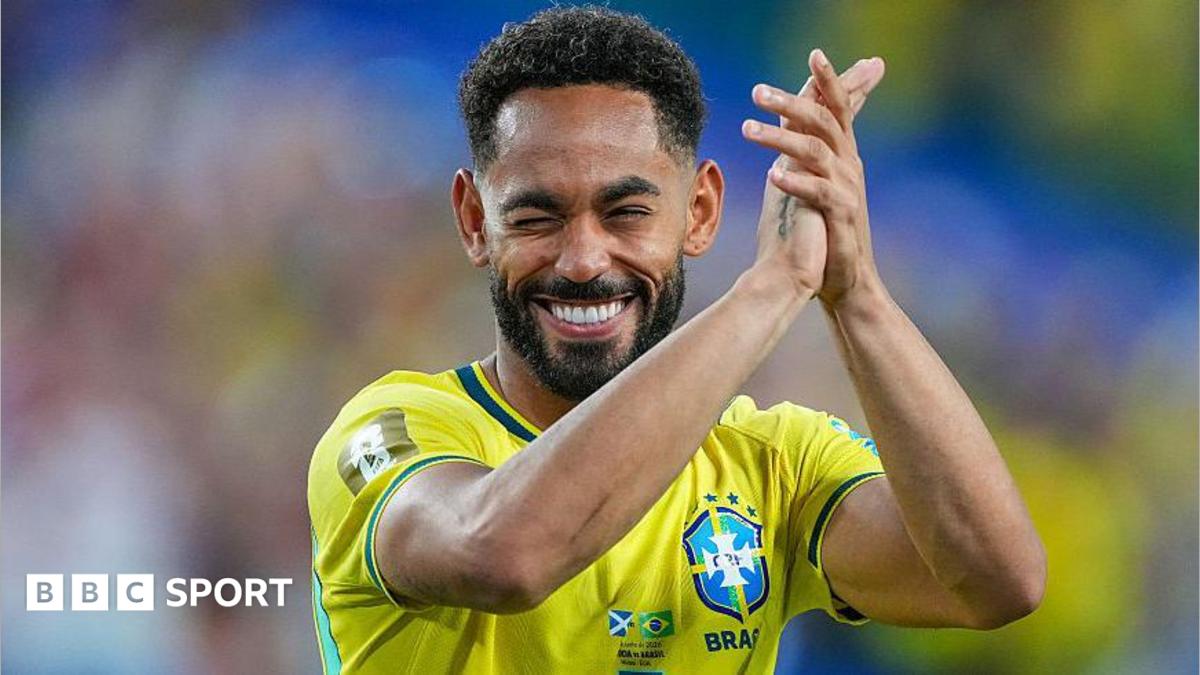
Why Matheus Cunha has become central to Ancelotti’s Brazil

Lucas Leiva argues that Matheus Cunha’s hybrid forward role is helping Brazil find balance under Carlo Ancelotti, with the team adapting tactically after the group stage.

Why Matheus Cunha has become central to Ancelotti’s Brazil
Image credit: bbc.co.uk

Matheus Cunha has emerged as a major piece in Brazil’s attack under Carlo Ancelotti, according to Lucas Leiva’s BBC Sport analysis. Cunha has scored three goals at the tournament and is being used as a flexible centre-forward who can both finish moves and connect play.

Rather than acting as a fixed number nine, Cunha drops into deeper areas and forces defenders into difficult choices. That movement can open room for Vinicius Jr and Rayan, while also giving Cunha space to receive between the lines if opponents hold their position.

Leiva also points to Ancelotti’s broader shift toward adaptability. Brazil have moved from a 4-2-3-1 to a 4-3-3, with Casemiro receiving more midfield support from Bruno Guimaraes and Lucas Paqueta, and the full-backs taking a more restrained role than in many past Brazil sides.

The picture is encouraging but still developing. Brazil have scored seven and conceded once so far, yet Japan are framed as a more fluid attacking test in the last 32, making the next match an important measure of whether this more pragmatic Brazil can keep progressing.

Sources & copyright

This article does not reproduce any source in full. It is built from public facts and editorial work; original links belong to their authors.

Public sources

This article may use AI for summarization, translation, or SEO assistance, and is reviewed by editors before publishing.

Discussion

    Related reading

    News
    Giroud: Van Dijk’s leadership remains central to Dutch World Cup hopes
    Editorial2 min
    News
    Hong Myung-Bo steps down after South Korea’s World Cup exit
    Editorial1 min
    News
    Canada’s late breakthrough turns first knockout win into a landmark moment
    Editorial1 min
    News
    Haaland, not Messi, looks like the clearest national-team dependency
    Editorial2 min