
World CupBrazil -- Japan17:00World CupGermany -- Paraguay20:30World CupNetherlands -- Morocco01:00World CupIvory Coast -- Norway17:00World CupFrance -- Sweden21:00World CupMexico -- Ecuador01:00World CupEngland -- Congo DR16:00World CupBelgium -- Senegal20:00World CupUSA -- Bosnia & Herzegovina00:00World CupSpain -- Austria19:00World CupPortugal -- Croatia23:00World CupSwitzerland -- Algeria03:00World CupAustralia -- Egypt18:00World CupArgentina -- Cape Verde Islands22:00World CupBrazil -- Japan17:00World CupGermany -- Paraguay20:30World CupNetherlands -- Morocco01:00World CupIvory Coast -- Norway17:00World CupFrance -- Sweden21:00World CupMexico -- Ecuador01:00World CupEngland -- Congo DR16:00World CupBelgium -- Senegal20:00World CupUSA -- Bosnia & Herzegovina00:00World CupSpain -- Austria19:00World CupPortugal -- Croatia23:00World CupSwitzerland -- Algeria03:00World CupAustralia -- Egypt18:00World CupArgentina -- Cape Verde Islands22:00
Back to news
Football

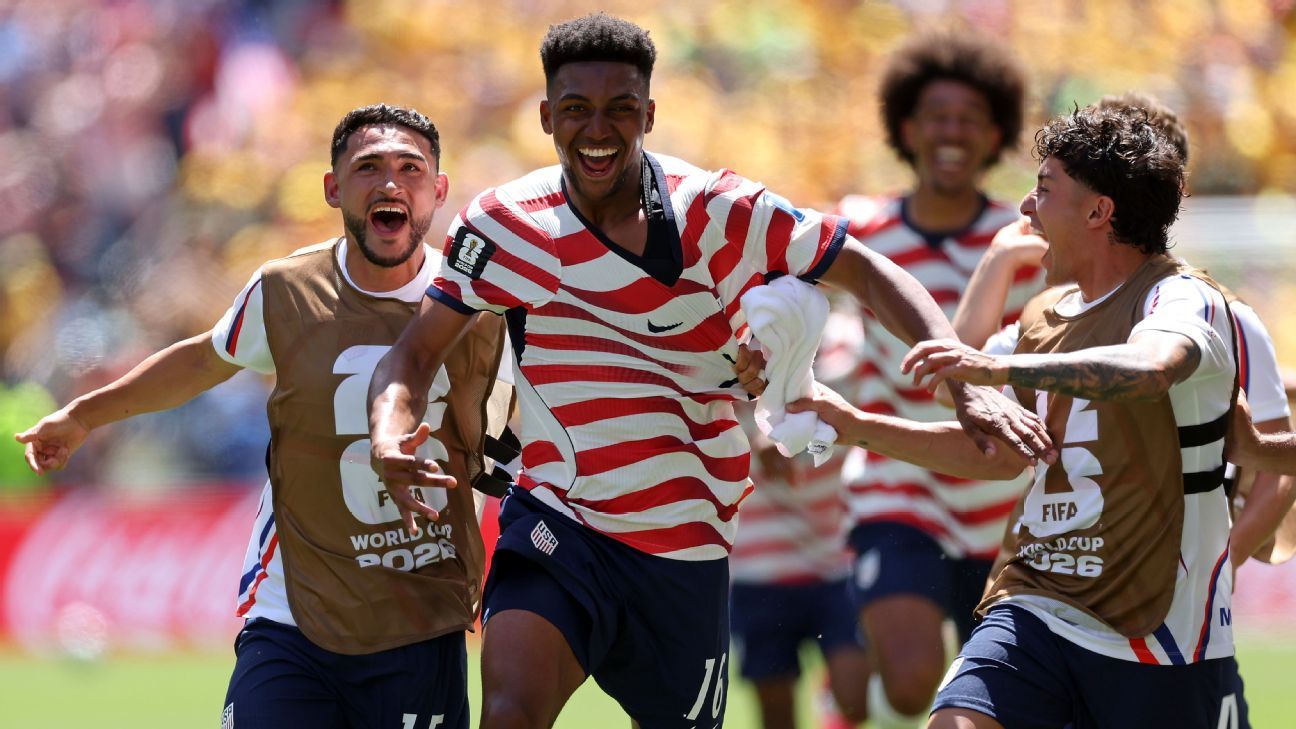
World Cup Round of 32 picture: Argentina lead a varied field of contenders

ESPN’s tournament analysis frames the expanded 32-team knockout stage as a wide-open tactical test, with Argentina’s Messi-led form, Australia’s defensive resistance, Belgium’s reliance on Jérémy Doku and Bosnia & Herzegovina’s aerial threat among the early storylines.

World Cup Round of 32 picture: Argentina lead a varied field of contenders
Image credit: espn.com

The 2026 World Cup knockout rounds are set to include 32 teams, and Argentina are presented as one of the strongest early contenders after topping Group J with two wins from two. ESPN’s analysis also points to Australia, Belgium and Bosnia & Herzegovina as examples of how different styles could shape the Round of 32.

Argentina’s case is built around Lionel Messi’s production and a defence that, at the time of reporting, had not conceded a goal or a shot worth 0.15 expected goals. The projected Round of 32 meeting with Cape Verde remains based on current standings, so editors should treat that matchup as provisional rather than fixed.

Australia’s profile is almost the opposite: the Socceroos have been difficult to break down, conceding only two goals in three group matches, but their own attacking output has been limited. Belgium’s outlook is tied closely to Jérémy Doku’s ability to change matches, while Bosnia & Herzegovina offer a more physical, set-piece-heavy challenge built around height and aerial duels.

The broader takeaway is that the expanded format gives the knockout stage more tactical variety, but also more uncertainty. Projections, Opta title percentages and current standings can shift quickly, so this should be framed as a snapshot of the tournament picture rather than a settled bracket forecast.

Sources & copyright

This article does not reproduce any source in full. It is built from public facts and editorial work; original links belong to their authors.

Public sources

This article may use AI for summarization, translation, or SEO assistance, and is reviewed by editors before publishing.

Discussion

    Related reading

    News
    Morocco and Netherlands set for high-stakes Monterrey knockout meeting
    Editorial1 min
    News
    Scotland’s coaching debate begins after Clarke resignation
    Editorial1 min
    News
    Canada reach World Cup last 16 after Eustaquio’s stoppage-time winner
    Editorial1 min
    News
    Ancelotti keeps Brazil focused as Japan test looms
    Editorial1 min